What Happens to My Annuity When I Die?
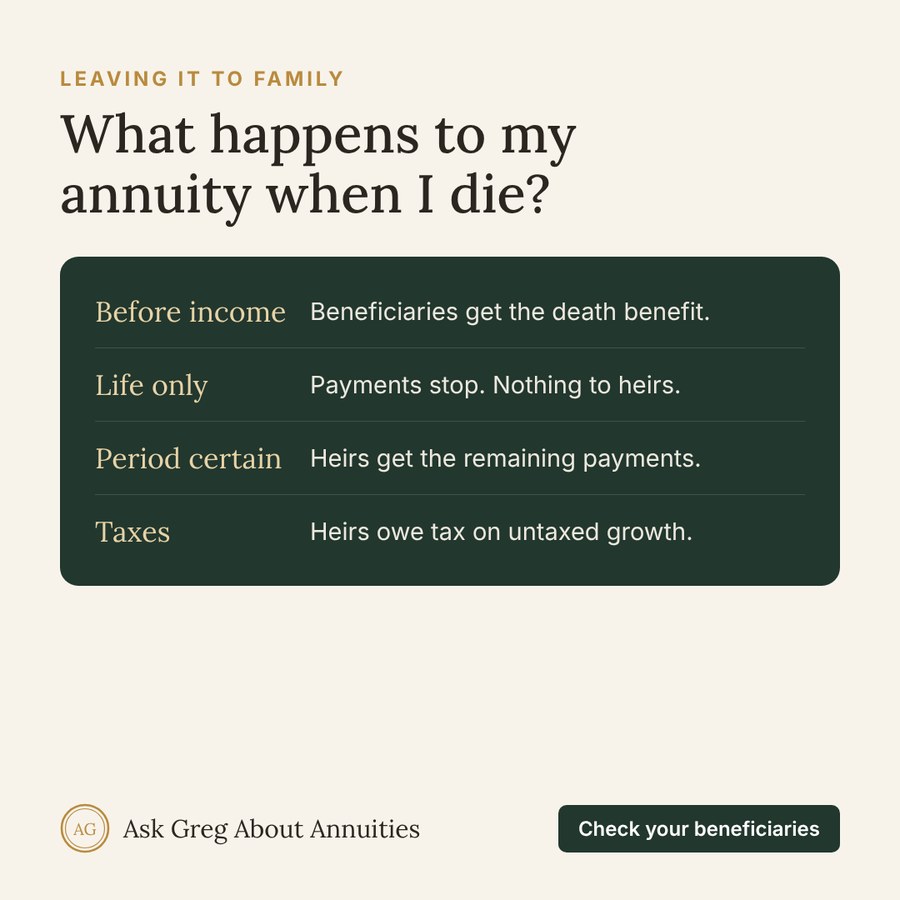
It's one of the most common questions I get, and a good one to ask before you buy. The answer depends mostly on one thing: whether you've turned the annuity into an income stream yet.
If you haven't started income yet
Most annuities pay a death benefit to the beneficiaries you name. It's usually at least the account value, and many contracts waive any surrender charges at death. Because there's a named beneficiary, the money generally goes straight to them without going through probate.
If you've already annuitized
If you traded your lump sum for guaranteed lifetime payments, what happens depends on the payout option you picked at the start:
- Life only. The highest payments, and they stop when you die. Nothing goes to your heirs.
- Life with period certain. Payments for life, with a guaranteed minimum number of years, such as 10 or 20. If you die early, your beneficiary gets the remaining payments.
- Life with cash refund. If you die before getting back what you put in, your beneficiary receives the difference.
- Joint life. Payments continue for as long as either you or your spouse is alive.
The more protection for your heirs, the lower the monthly payment. That's the trade-off to decide before you sign.
Want to see how this applies to your money? I'll walk through your numbers on a free call, in plain English. Pick a time →
Options your beneficiaries have
A spouse can often keep the annuity going as their own, with tax deferral intact.
Other beneficiaries usually choose between a lump sum, spreading withdrawals over a set number of years, or taking payments over their own lifetime. With IRA annuities, most non-spouse beneficiaries must empty the account within 10 years.
What they owe in taxes
Beneficiaries pay ordinary income tax on any growth that hasn't been taxed yet. Unlike stocks or real estate, there's no step-up in value at death. Spreading withdrawals out over several years can keep them in a lower tax bracket. More on how annuities are taxed.
Three things to do now
- Check your beneficiaries. Life changes, and old forms don't update themselves.
- Name a backup. A contingent beneficiary keeps the money out of probate if your first choice passes before you.
- Know your payout option if you've already annuitized.
If leaving money to family is a main goal, say so up front. It changes which product, and which options, make sense. Taxes and estate questions are personal, so check the details with your CPA or estate attorney too.
Have a question about your own numbers?
Book a free call of up to 30 minutes. I'll give you a straight answer in plain English, including when the best move is to leave things where they are.
Book a free callFree guide: 5 questions to ask before you buy any annuity
A two-page checklist you can print and bring to any annuity conversation, with room for notes. Enter your email and it's yours.
No spam. I'll send an occasional plain-English note, and you can unsubscribe anytime. Privacy policy.